
Temple City Resident Records
A one-person search starts with the record that matches the strongest clue already in hand. An address points to the Assessor; a case number points to the court; a family event points to RR/CC or CDPH; a business name points to the Secretary of State. The table keeps the source question separate from the identity claim.
| Record | What It Confirms | Where | Access |
|---|---|---|---|
| Assessor parcel | Owner relationship to a parcel, situs, AIN, value, and tax-mailing destination | LA County Assessor | Free address or AIN search; owner-name web search is not offered. |
| Recorded deed | Grantor, grantee, transfer date, legal description, and document number | RR/CC Norwalk | Alphabetical person-and-year index; copies by office or request route. |
| Voter status | Whether supplied identity and address fields match a county record | LA County voter tool | Self-verification only; full information has statutory limits. |
| Court case | Party spelling, role, case number, filing type, and docket activity | LA Superior Court | Case-type routes; fees and document access vary. |
| Birth, death, or marriage | Event facts and family relationships | RR/CC or CDPH | Informational and authorized-copy rules differ. |
| Probate | Decedent, petitioner, representative, heirs, and hearings | LA Superior Court probate | Public material can be sealed, redacted, or stale. |
| Business or DBA | Entity affiliation, agent, filing address, and status | SOS bizfile and RR/CC | Free index; county FBN copy route is separate. |
| Professional license | Licensee name, number, type, status, and public discipline | California DCA and boards | Free lookup; displayed address is not residence proof. |
| Unclaimed property | Name plus a reported address or city tied to held property | State Controller | Free search; historical clue, not a current locator. |
Use a parcel clue for a property question, a case clue for a court question, and a family relationship for a vital-record request. A name alone is the weakest starting point because same-name results can belong to different people.
Temple City Court Search Fields
Los Angeles Superior Court separates case access by category. The public Find a Case route offers case-number access, calendar access, civil party-name searching, and criminal defendant-name searching. Document images are conditional, and the online summary warns that the data are provided “as is,” not as the official record.
| Mode or field | Type | Required | Result or limit |
|---|---|---|---|
| Case Access / case number | Text | Yes | Opens a public summary where remote access is available. |
| Case Calendar / case number | Text | Yes | Shows future hearing information. |
| Case Document Images | Account or guest | Conditional | Fee and division limits apply; specified civil and small-claims images only. |
| Search case number by name, civil | Paid party-name search | Yes | Civil, small claims, family, and probate routes. |
| Search case number by defendant name, criminal | Paid name search | Yes | Criminal defendant route. |
| Filing courthouse | Dropdown | No | Optional filter for limited-jurisdiction matters. |
| Search | Button | Not applicable | Executes the selected query. |
A typical result inventory can include the caption, party names and roles, case number, courthouse, filing date, category, hearings, register of actions, disposition, judgment, and document availability. Sealed, juvenile, adoption, protected, and some family material stays out of the public result.
The actual court file can be requested in person, by mail, and sometimes online, depending on the case and document. Archived or offsite material may take weeks, while courthouse terminals can expose public electronic material that is not available through the remote search.
- Case number and caption identify the docket container.
- Filing courthouse and filing date place the record.
- Party role distinguishes a person named in a case from the person who filed it.
- Register entries, hearings, and disposition describe procedure, not current residence.
- Document-image availability depends on case division and access rules.
The Los Angeles Superior Court Find a Case portal is the direct source for the case-number and party-search routes used in a Temple City resident lookup.
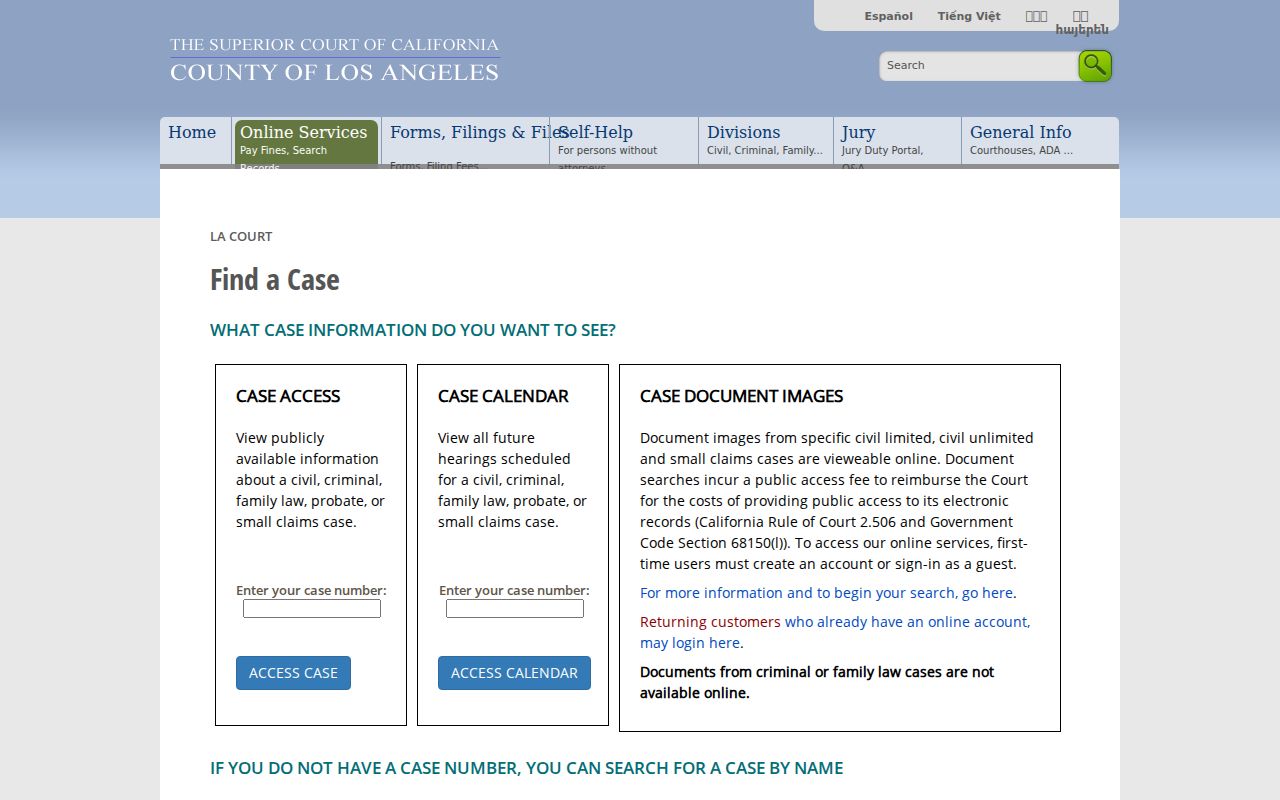
The court image reinforces the distinction between a searchable summary and the underlying file. Call the court clerk with a case number when the result needs correction or a copy route.
The Same-Name Trap
Same-name results are common in a county as large as Los Angeles. Preserve middle initials, suffixes, hyphenation, former surnames, and the exact form used by each custodian. A matching name is a lead. It is not an identity finding.
Compare two independent facts before treating a record as belonging to one person. An APN-linked deed can pair with a probate case. A business filing can pair with a professional license. A voter self-check can be confirmed by a current mailing item supplied by the subject. Recording dates are document events, not dates a person moved.
Owner and occupant are different categories. The Assessor's situs is the land, and its mailing destination belongs to the owner record. An owner may live elsewhere, while a person who lives at the parcel may have no public ownership entry. Keep that distinction in every Temple City resident lookup note.
Verify a Temple City Resident
Verification is a short chain, not a pile of unranked hits. Begin with the narrowest known identifier, then ask each custodian for the record that can confirm or correct it.
- Anchor the name to an address or AIN when one is lawfully available, and write down the situs separately from any mailing destination.
- Run the court party or defendant search with name variants, then compare case number, role, filing courthouse, and dates.
- Check a vital-record route only when the event and qualifying relationship are known. Use an informational copy for genealogy when an authorized copy is not available.
- Order a certified copy from the responsible custodian when the record must carry official copy status.
- Docket
- The court's organized case record, including the case number, parties, filings, hearings, and later actions.
- Index versus image
- An index or summary points to a record. An image is the scanned or filed document, and access can carry a fee or division limit.
- Certified copy
- A copy issued or certified by the custodian as an official copy for an allowed purpose. It is not the same as a search result.
Call the clerk with a case or document number rather than asking staff to identify a person from a vague biography. Custodians can explain access and correction routes; they do not build a new dossier.
Temple City Vital Record Copies
California separates authorized and informational certified copies. An authorized copy may establish identity for a qualified requester who supplies the required sworn statement. An informational copy carries essentially the same event data but is marked that it is not valid to establish identity, with possible redactions.
- Birth
- LA RR/CC or CDPH. The 2026 state fee listed in the research is $31.
- Death
- LA RR/CC or CDPH. The 2026 state fee listed in the research is $26.
- Public marriage
- RR/CC or CDPH for held years. The 2026 state fee listed is $19.
- Confidential marriage
- County of issue, limited to spouses or a court order. The state fee listed is $19 where available.
- Divorce
- The decree or file is at Superior Court; CDPH supplies only a certificate of record for 1962 through June 1984, with the current VS 113-B total to verify.
Authorized requests can require a qualified relationship and a sworn penalty-of-perjury statement, notarized for a mailed application. Informational requests do not require notarization. California has no single live statewide name index, and no universal 50- or 100-year rule opens every certified record. Pre-July 1905 events may require county, church, cemetery, and newspaper research.
Temple City Voter Self-Check
The LA County voter-status tool is designed for a voter checking their own record. It requires all four identity and address fields below. It is not a public name search, and a failed match may reflect a spelling, birthdate, or address error.
- Last Name
- Required text field, alphabet only.
- Birthdate
- Required date or text field in mm/dd/yyyy format.
- House Number
- Required number field for the residence address.
- ZIP Code
- Required number field for the address area.
The LA County Voter Registration Status tool can confirm the supplied combination to the searcher. Broader voter information falls under Government Code §7924.000 and Elections Code §2194. The county street index is a contracted product for permitted political purposes, not an open list of people by street. Ballot choices never appear.
The county's voter information request route requires a stated purpose and contract. Voter records can include status, precinct, participation history, and other regulated fields, while Social Security numbers, driver or identification numbers, signatures, and confidential voter information are not released.
The LA County voter information request rules show the difference between self-verification and a restricted file order.
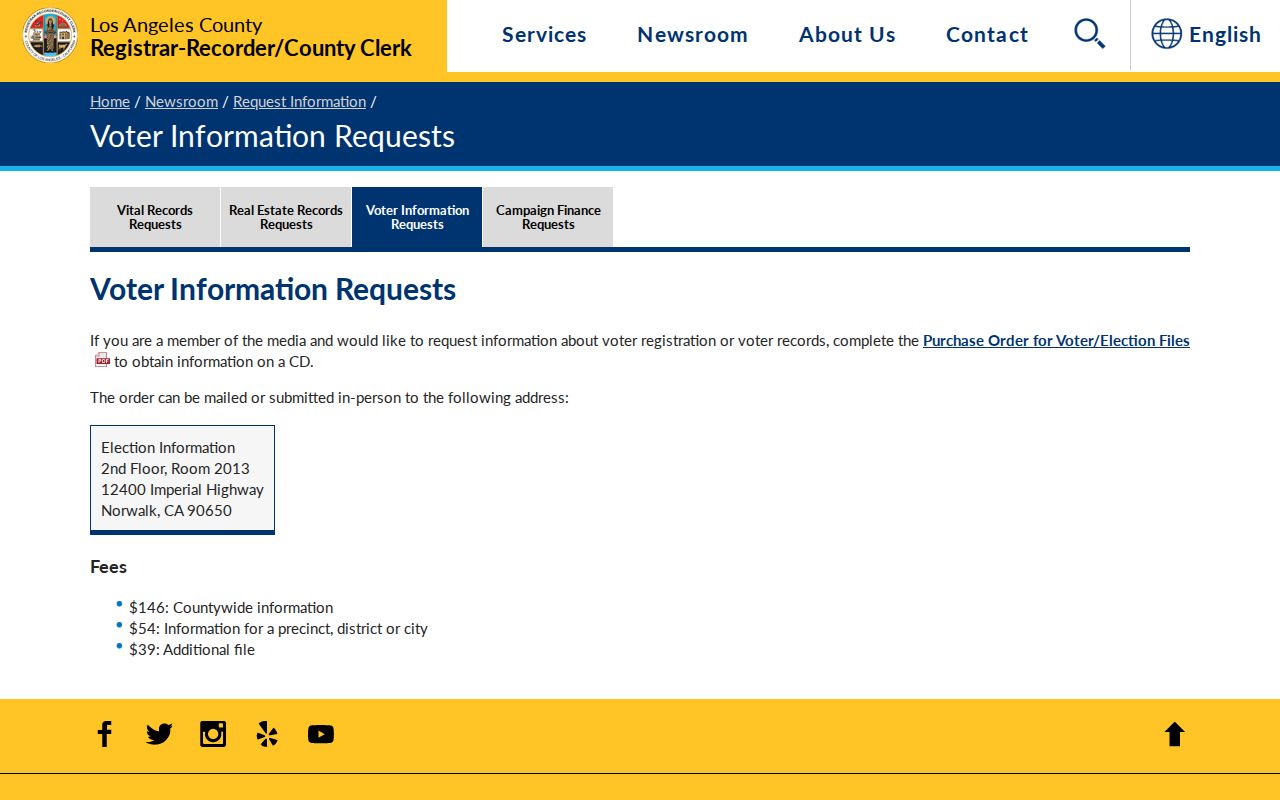
Use the voter image as a reminder that registration status is not a browseable resident directory and participation history never reveals a ballot choice.
Temple City Probate and Adoption
An heir search begins with a decedent's probate docket. Filed material may identify the decedent, petitioner, personal representative, heirs, hearings, and the transfer that follows. Addresses can be redacted or stale, so pair a probate name with a deed, death evidence, or an obituary rather than treating one docket as current residence proof.
California adoption files are confidential. The California Department of Social Services (CDSS) Mutual Consent Program provides a lawful route for contact between adult adoptees and birth parents when each person files the required consent. Separated siblings use the applicable confidentiality-waiver forms. The program is a consent process, not a public resident lookup.
A person looking for a former classmate can use Temple City High School yearbooks, library history, and Camellia Festival programs as leads, then ask the record custodian for corroboration. Family history works best when the purpose and the source are both clear.
Temple City Cross-Checks
Business and professional records can add a second identity signal without turning an office address into a home address. California Secretary of State BizFile can show entity name, status, agent, officers or managers, and filing documents. California Department of Consumer Affairs License Search can show a license number, type, status, dates, and public discipline. Temple City's archive can add a dated civic appearance.
The Temple City City Archive searches keywords, archive category, time period, and start and end dates. Surnames may surface appointments, speakers, awards, planning applicants, or public comments. A city archive hit shows participation in a city record, not residence.
For a public safety registry, California Megan's Law offers name and map or address modes with statutory-use warnings. The CDCR locator is a separate incarcerated-person source with its own disclaimer and result fields. These sources answer narrow status questions and should never be used to infer a person's full identity from a name alone.
The California Megan's Law Website is the official registry source for the limited public-safety search described above.
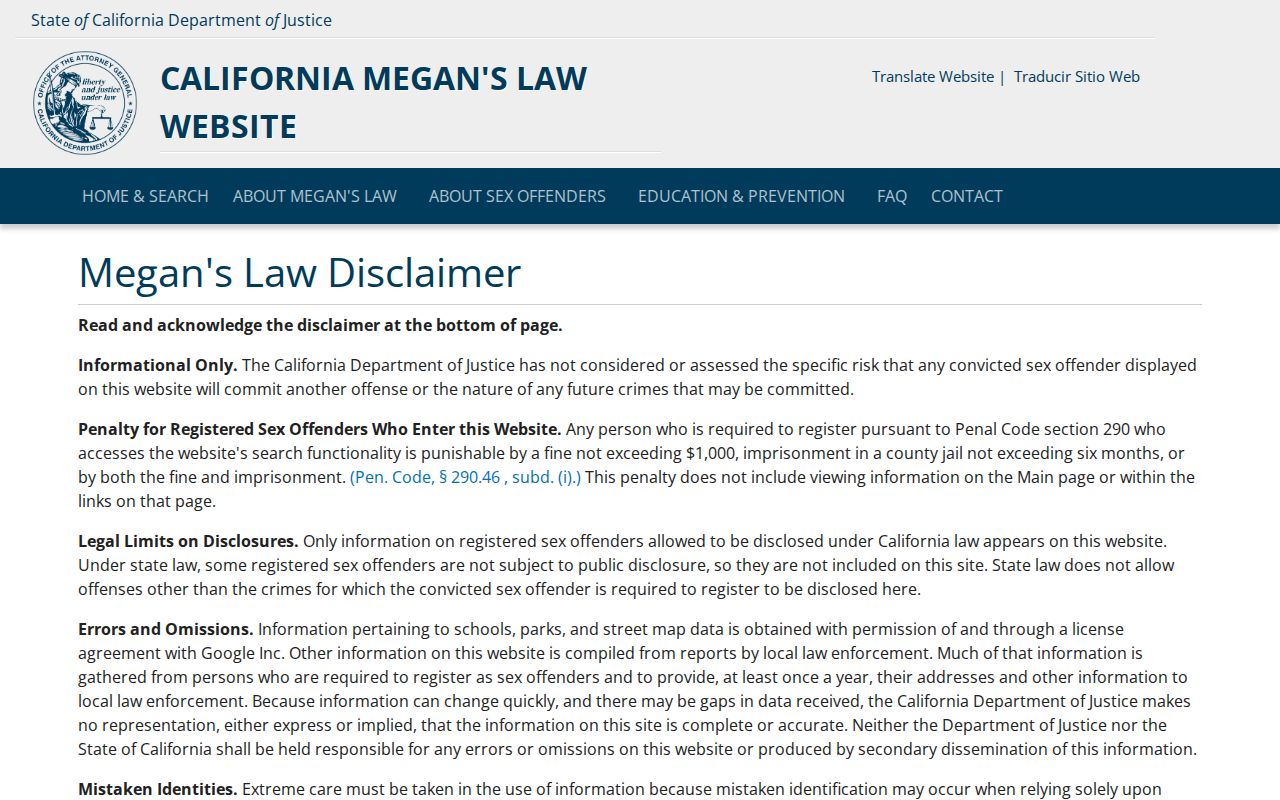
Registry results must be read with the source's warning and date. A public result is not permission to contact, threaten, or expose a person.
The California CDCR locator supplies a separate correctional-record route for a narrow status check.
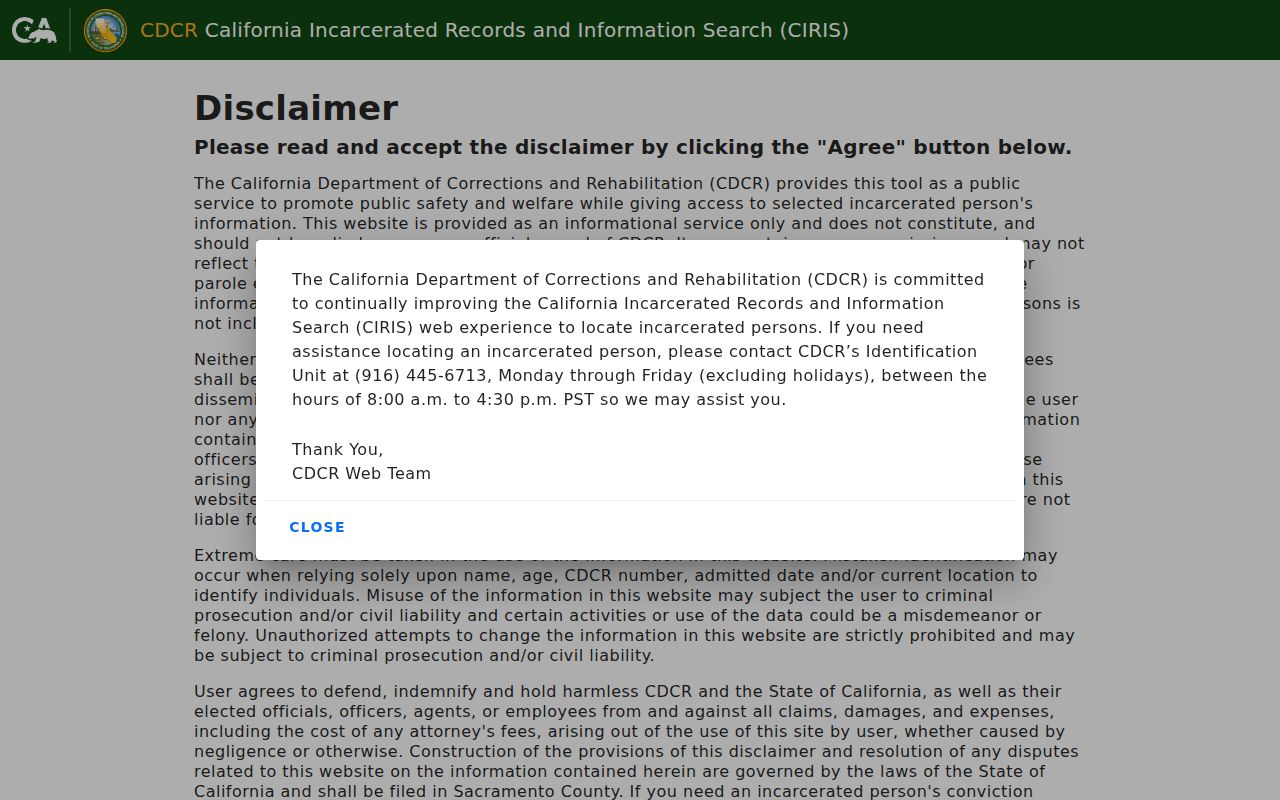
When a result needs correction, contact the responsible agency with its displayed number. A state locator does not replace a court file.
Unclaimed Property for Temple City
The State Controller's Unclaimed Property search accepts a name or property ID, with optional address or city and a CAPTCHA. A match may connect a name to a reported address from an earlier period. It is a historical clue, not proof of current location or identity.
Search and claim through the official state route without paying a finder. Compare the spelling, address, and property details with a separate record, then stop if the match cannot be supported by a second fact.
The California Unclaimed Property search shows the name, address, city, and property-number path for a limited historical cross-check.
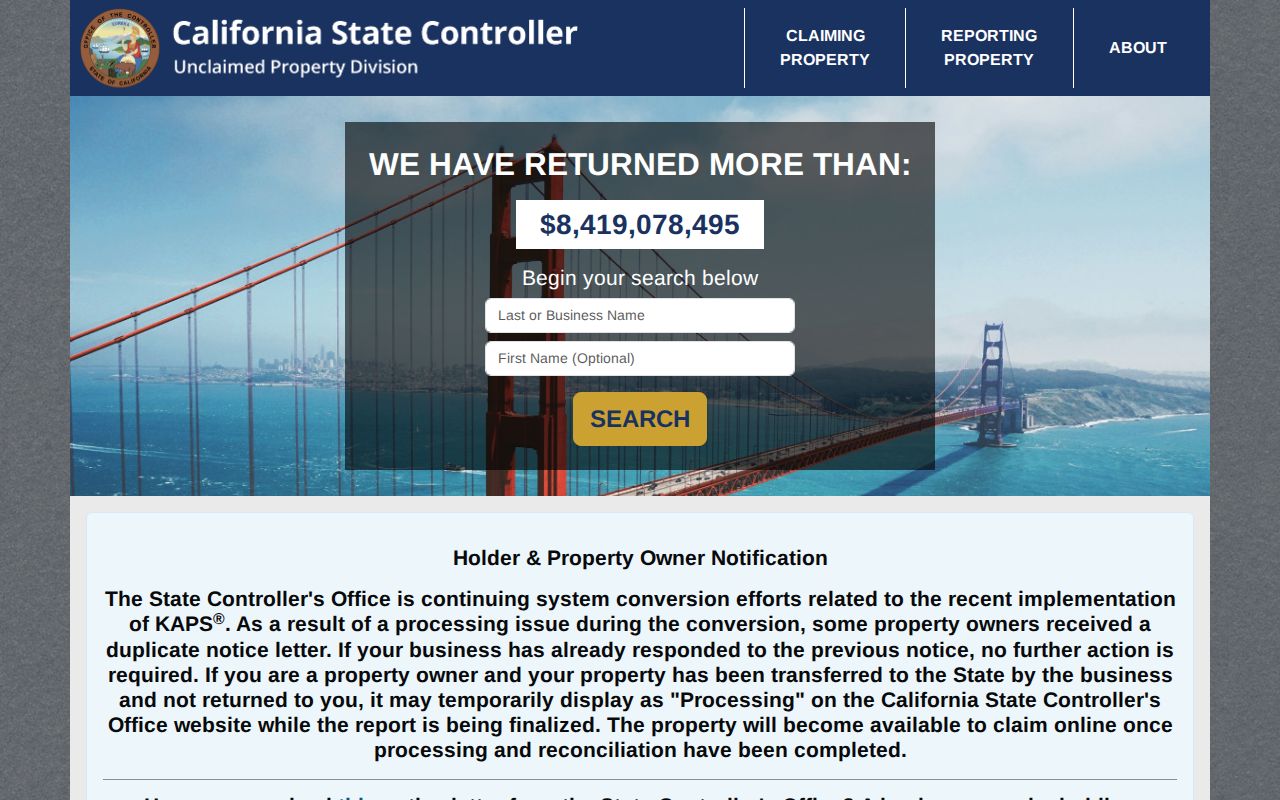
The image belongs with the cross-check workflow because the Controller holds property, not a current resident roll.
2026 DROP for Temple City
California's Delete Request and Opt-Out Platform, known as DROP, gives a consumer one verified deletion request for active registered data brokers. Under the 2026 rollout, brokers begin retrieving requests August 1 and must retrieve them at least every 45 days, then delete matched nonexempt data and inferences and report status. The request can reduce compiled copies; it does not erase the deed, court file, license, or other source record held by a custodian.
| Route | Best evidence | What it can change | What remains separate |
|---|---|---|---|
| Official custodian | Deed, docket, voter self-check, vital copy, license, or city file | Corrects or supplies the source record through its own process | Other custodians and historical copies |
| DROP | Verified deletion request and broker status response | Matched nonexempt compiled data and inferences at participating brokers | Public source records, sealed files, and lawful archival copies |
| Opt-out choices | Confirmation from a data service or state privacy channel | Sale or sharing choices where the route applies | Facts already held by a government custodian |
Use the California Privacy Protection Agency data-broker page, submit only the minimum match details, retain confirmations, recheck after the broker cycle, and complain to the appropriate state office if a verified request is ignored.
Legal Boundaries for Temple City
The California Public Records Act, Government Code §§7920.000 et seq., is a request route for existing disclosable agency records, not a right to a government-built dossier. Under §7922.535, an agency ordinarily determines whether records are disclosable within 10 calendar days, with a written extension of up to 14 days for unusual circumstances. An agency need not create a new list or answer a question that is not an existing record.
Send a narrow request to the actual custodian. The California Government Code CPRA timing section supports a category, date span, name, address, or case-number request. Use the Assessor for parcel facts, the court clerk for a docket, RR/CC for a recorded index, Elections for a self-check, and the licensing board for a license entry.
Safe at Home under Government Code §§6205–6216 gives qualifying participants a substitute mailing address and confidential voter option through an enrolling agency. Adoption, juvenile, sealed, confidential-marriage, full SSN, driver-number, and protected-address records are not gaps to evade. A missing result may be a lawful privacy feature.
Lawful use. A Temple City resident lookup is for personal, lawful research, family history, reconnecting, and source verification. Do not use records to stalk, harass, intimidate, expose, or harm another person; take a disputed result back to the custodian.
When a name hit cannot be supported by two independent facts, stop at the lead. Accuracy comes from the office that holds the record, not from a confident guess.