
Begin with Temple City Records
Temple City has no universal residents list. The first useful choice is the record type. An address is best anchored in the Los Angeles County Assessor parcel search. A deed then adds a dated transfer and legal description, while a city permit can show an applicant or project participant. A person’s own voter-status check is different again: it authenticates supplied identity and address fields, but it is not a public street browse. Court, license, business, vital, and historical sources answer narrower questions. That split is why a careful Temple City residents directory search moves from the strongest known fact to a matching custodian.
Keep ownership, occupancy, and appearance in a directory separate. The Assessor web result gives situs and parcel facts, not a public owner-name search. A deed identifies parties to an instrument, not every person who used the property. A city directory can show a listed subscriber or household at a past date, not continuous residence. Search notes should preserve the source, date, spelling, address form, and record number so another check can repeat the trail.
- Start with the exact name, street address, parcel number, or time period already known.
- Use the Assessor address or AIN search to anchor a property question.
- Move to the Recorder, court, voter, license, or business custodian that fits the question.
- Use directories, census records, cemetery indexes, and obituaries for a past household trail.
- Ask for an existing record when the needed material is not online; do not ask an agency to build a new list.
Offices Behind Temple City Records
The city, county, and state divide the work. Temple City City Clerk handles municipal requests, minutes, ordinances, resolutions, ethics filings, elections, permits, planning material, and city archive records. Los Angeles County holds the Assessor parcel roll, Recorder index, county vital records, and election records. The Superior Court holds case files. State portals add professional licenses, business entities, unclaimed property, and other narrow records. The Temple City street record route becomes clearer once each office is treated as a separate source instead of a single resident database.
Los Angeles County RR/CC
Real Estate Records Section
P.O. Box 1130, Norwalk, CA 90651-1130
(800) 201-8999 option 3
Los Angeles County Assessor
East District Office
1190 Durfee Avenue, South El Monte, CA 91733
(626) 258-6001; (888) 807-2111
LA County Elections
Election Information, Room 2013
12400 Imperial Highway, Norwalk, CA 90650
(800) 815-2666
City Hall is at 9701 Las Tunas Drive, Temple City, CA 91780. The City Clerk route is cityclerk@templecity.us and (626) 285-2171. A county or state custodian is the better first stop for marriage, birth, fictitious business name, deed, or county vital records because Temple City expressly directs those requests elsewhere.
Temple City Parcel Search
The Los Angeles County Assessor Portal starts an address-led Temple City residents directory trail. Its web search accepts a 10-digit AIN or a situs address. The AIN is the assessment key, commonly written as four map-book digits, three page digits, and three parcel digits. The portal does not offer a public owner-name search. Owner and mailing information can be inspected at an Assessor district office or obtained through Property Data Sales, while the web result remains centered on the parcel.
Save the AIN, situs, parcel status, use type, building and land facts, values, exemption flag, map link, and recent parcel activity. The detail page says the boundary description is for assessment purposes, not the deed’s legal description. The parcel map is an assessment tool, not a survey. Detail data usually update weekly outside annual roll preparation, which can interrupt updates roughly from July through late September.
| Assessor search mode | What it accepts or shows |
|---|---|
| Basic Search | General parcel search mode for a direct property query. |
| Legal Search | Map and legal-oriented parcel search mode. |
| AIN or Address | One autocomplete box; enter a 10-digit AIN or physical situs address. |
| Map Layers | Parcel context and Recent Sales Parcels for the last 24 months. |
- Parcel
- A mapped assessment unit with its own AIN and property facts.
- Situs address
- The physical location of the parcel, distinct from an owner’s mailing address.
- Roll
- An agency’s organized record of assessed property or registered records.
- Index
- A finding aid that points to a record; it is not always the document image.
- Criss-cross directory
- An older address-order volume that can show a listed subscriber or household clue at a given date.
The Assessor’s official parcel page illustrates the detail a name or address search can reach without turning the web portal into an owner directory.
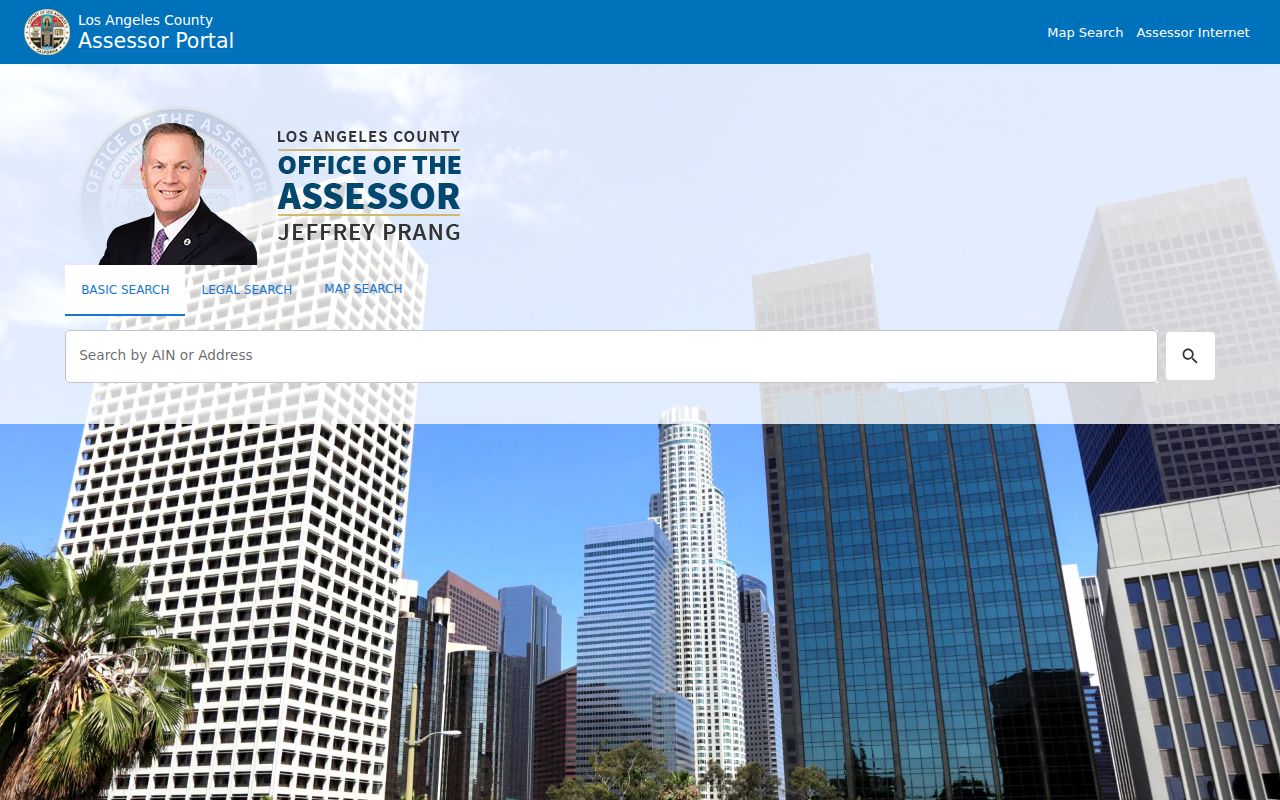
The screenshot is useful for the first step: identify the parcel, then take the AIN and situs into the next record system.
Why Los Angeles Deeds Stay Offline
Los Angeles County maintains real-estate records from 1850, but its public deed index is not on the Internet. The Norwalk office arranges the alphabetical name-and-year index by grantor and grantee. Records from 1851 through 1957 are on the lower level, and 1958 to the present are on the second floor. Staff will not accept an index search by telephone. An appointment may be scheduled up to two weeks ahead.
The offline design is a local records quirk with a practical effect. Begin with an AIN and current owner context, estimate a recording year, then bring the person name and year to Norwalk. The index supplies a document number, title, date, and parties. A copy request is strongest when that document number is known. Plain copies cost $5 for the first page and $3 for each additional page. Certified copies cost $6 plus $3 for each additional page. A name-and-year search is $0.50 per name and year, with a $1 minimum.
The Recorder viewing instructions explain why a street or APN alone will not run the index. The office cites the former Government Code section 6254.21 restriction on publishing officials’ home addresses and the difficulty of screening protected names. The result is not a dead end. It is a counter, mail, fax, or online order route that depends on a person name, a year, or a known document.
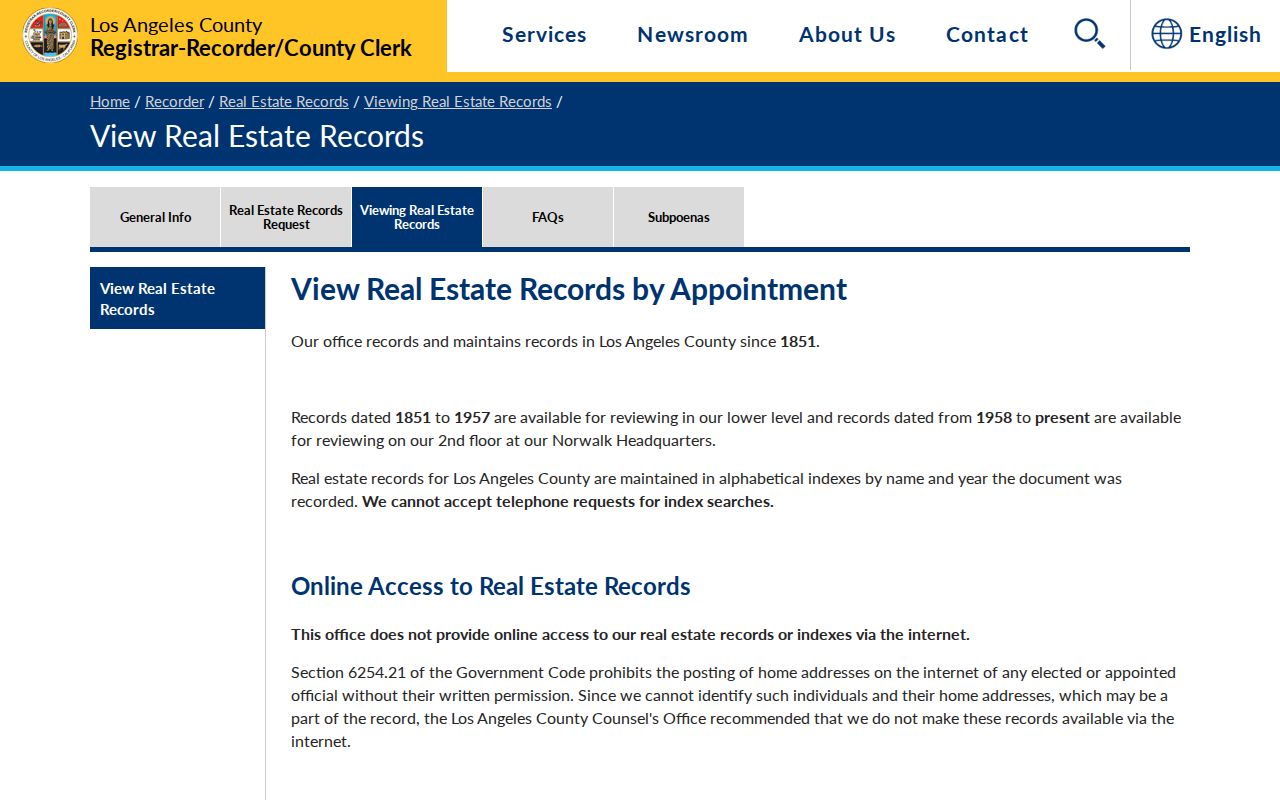
The recorder image marks the key contrast: the county’s records reach back to the county’s beginning, while the index search itself remains an in-person task.
Temple City Hall Records
Temple City’s public-record request route is for records prepared, owned, used, or retained by the city. The Clerk can help identify an existing record. Stored records and building plans may need staff time for location and review before an inspection appointment. City Hall hours are Monday through Friday, 8 a.m. to 5 p.m. Copies cost $0.50 for the first page and $0.10 for each additional page. Building plans may require a certified reprographer at requester expense.
Useful local channels include agendas and staff reports, agreements, ordinances and resolutions, commission records, monthly new-business-license reports, the permit archive, current case search, and the City Archive Center. The permit archive asks for a street name before a street number and returns scanned permit images. Current case search covers pending building permits, current plan reviews, and active code-enforcement cases. A single-family residential building plan is retained for only six months, while industrial, commercial, and multifamily plans are held for the life of the structure.
The Temple City official website is the gateway to departments and local service pages. It helps separate a city record from a county record before a request is sent. For a local name trail, the City Archive Center searches keywords, an archive group, a time period, and start and end dates. A surname can surface a civic appointment, applicant, speaker, award, or comment, but an archive hit is not a current residence proof.
One Temple City Voter Record
The LA County Voter Registration Status form is a self-verification tool. It requires a last name, birthdate, house number, and ZIP Code. A match confirms the supplied identity and address combination for the searcher. A nonmatch does not prove that a person is unregistered because a spelling, birthdate, or address entry may be wrong. The form is not a browseable street roll.
Home address, phone, email, precinct number, identifiers, and prior registration are confidential except for purposes allowed by Elections Code section 2194. A voter file or legacy street index is separately ordered, contracted, and limited to permitted political, election, scholarly, journalistic, or governmental uses. The county lists a $146 countywide file, a $54 precinct, district, or city file, and a $39 additional file. The application includes a statutory-purpose certification.
The four-field check is valuable when the person is present and wants to verify their own record. It should not be used to assemble an unidentified list of people at a Temple City address. Participation history can show that a ballot was credited, never how a person voted.
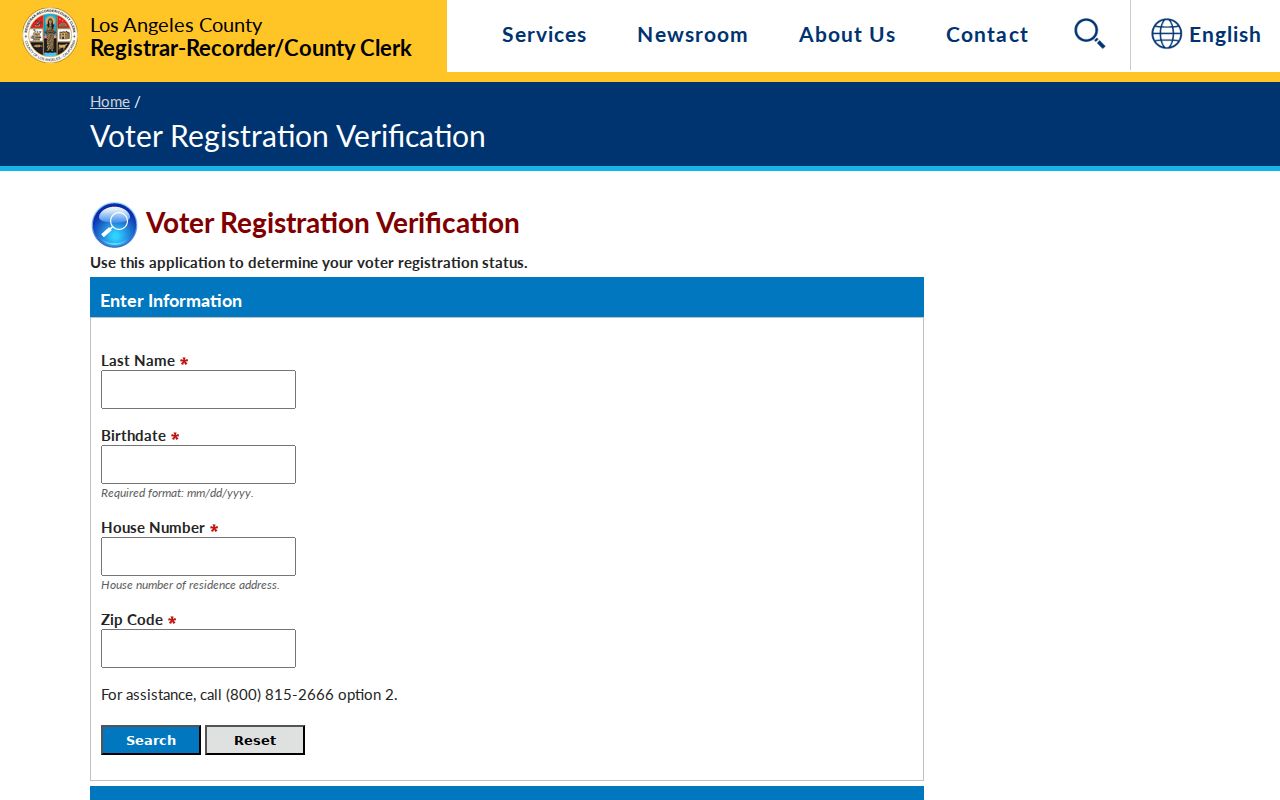
The voter image reinforces the access boundary: identity fields are required, and the search is built for self-checking rather than open-ended directory browsing.
Temple City Court Name Matches
Superior Court of California, County of Los Angeles, Case Access divides its search by case type. Case number access, calendar access, document images, civil party-name search, and criminal defendant-name search are separate routes. The name search for civil, small claims, family, and probate cases is paid under the cited court rules. Criminal defendant name search is also a paid route. A case number is the safer key whenever one is known.
A typical public result can show the caption, parties and roles, case number, filing courthouse, filing date, category, hearings, register of actions, and disposition or judgment when entered. The online data are supplied as is and are not the official record. Juvenile, adoption, sealed, protected, and parts of family files remain unavailable. Courthouse terminals can show public electronic material that is not remotely available. A docket is evidence of a court filing, not proof of present residence.
The Los Angeles Superior Court Case Access gateway is the right starting point for a Temple City case question. Preserve the case number and filing court, then ask the clerk about a copy in person, by mail, or through an available online route.
A same-name court hit needs a second fact such as an address, age, role, business connection, or known date before it belongs in a resident research note.
Current Temple City Directories
Current directory-like sources are narrow rolls, not a single list. The Assessor parcel detail anchors land and situs. The Recorder index names parties to recorded instruments. The voter status form checks one supplied record. City permits, archive records, licenses, court dockets, and state lookups each add a different kind of dated evidence. An inmate or offender portal is a specialized custody or safety record, not a general Temple City resident directory.
| Source | Who or What It Covers | Keeper | Access |
|---|---|---|---|
| Parcel detail | Situs, AIN, values, use, building and land facts | Los Angeles County Assessor | Free by address or AIN; owner data at counter |
| Recorded index | Grantors, grantees, liens, maps, and instruments | Los Angeles County RR/CC | Norwalk index; copies by request |
| Voter status | One supplied identity and address combination | LA County Elections | Free self-check; broader files restricted |
| City records | Permits, cases, licenses, minutes, archive hits | Temple City Clerk and departments | Online search or CPRA request |
| Specialized roster | Custody, offender, license, or business results | County or California agency | Use the named official portal |
LA County’s Inmate Information Center illustrates the last category. It can be a useful safety or custody check, but its result cannot be turned into a claim about a person’s home in Temple City. The same care applies to a professional license, a business filing, a court party, and an unclaimed-property address. The record says what its custodian records, at a point in time.
| Route | Best use | Limit |
|---|---|---|
| Official custodian | Traceable parcel, deed, court, voter, city, license, or vital evidence | Each record has its own access rule and may omit private facts. |
| Library or archive | Historical directories, census context, newspapers, and local ephemera | Years, publishers, OCR, and shelf access may be incomplete. |
| Commercial compilation | A quick lead assembled from mixed public and purchased data | Names and dates can be stale or merged, with no custodian correction path. |
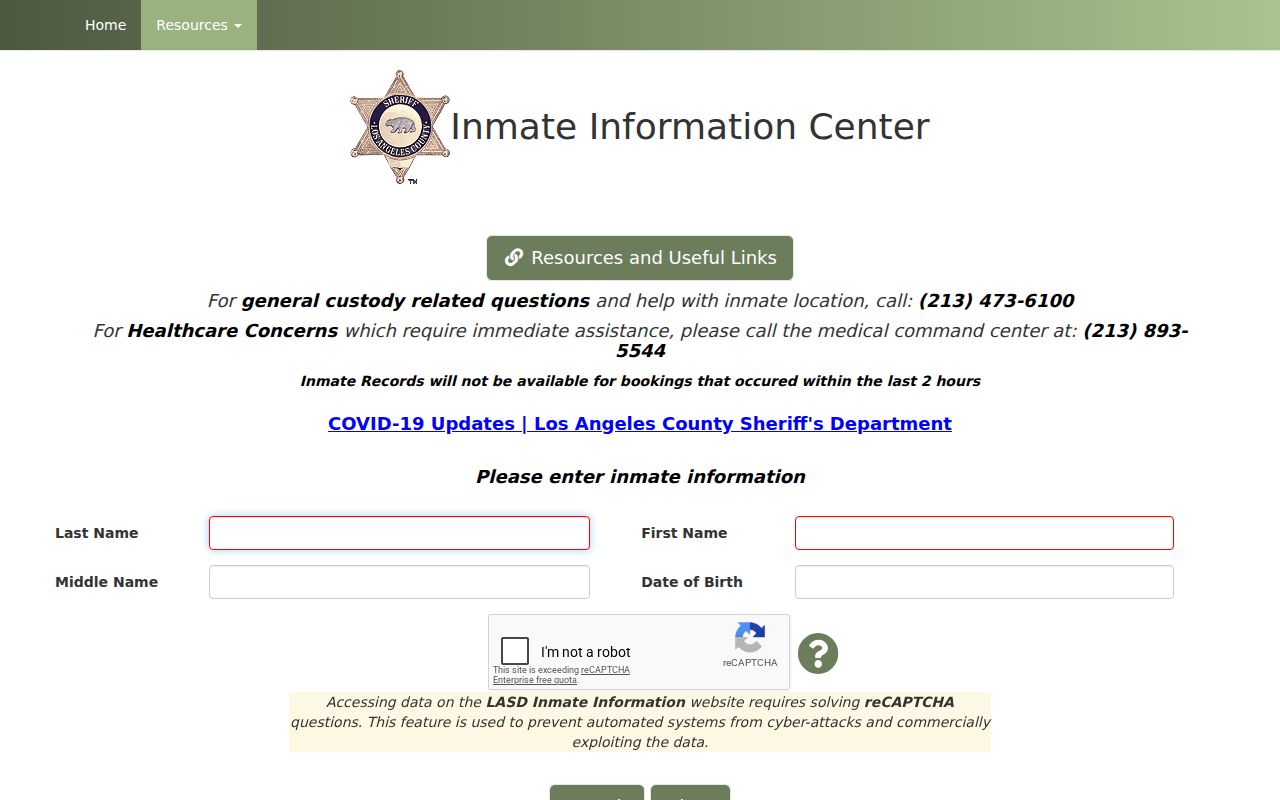
The specialized roster image belongs beside the limitation, so a narrow official lookup is not mistaken for a citywide directory.
Vital Copies for Temple City
Los Angeles County RR/CC and the California Department of Public Health issue birth, death, and marriage copies under different eligibility rules. Authorized copies require a qualified relationship or authority and a sworn statement. Informational copies carry much of the event data but are marked as not valid to establish identity. Confidential marriages are limited to a party or court order. Adoption records are confidential. Divorce decrees are held by the Superior Court, while CDPH supplies only certificates of record for the central 1962 through June 1984 period.
The 2026 state fees listed in the research are $31 for birth, $26 for death, and $19 for public marriage. The VS 111 birth form asks for the registrant’s full name, birth date and place, parents’ names, the requester’s relationship, copy type, purpose, contact details, signature, and any sworn declaration. Mailed authorized applications need notarization. CDPH has no state-operated electronic order portal, so the form and current fee schedule matter.
- Authorized copy
- A certified copy available to a qualified class or authorized requester and usable to establish identity.
- Informational copy
- A genealogy-friendly copy marked as unable to establish identity.
- Certified record
- A custodian-issued copy whose status depends on the record type and the requester’s eligibility.
For a family question, begin with the event and relationship sought. Do not treat a public index lead as permission to obtain a confidential record.
Before 1960, Search Temple
Temple City incorporated on May 25, 1960, after an April 26 vote. Earlier records were made by Los Angeles County, school districts, utilities, the railroad, civic groups, libraries, and businesses. The town was called Temple until 1926, when the name changed to Temple City to avoid confusion with Templeton, Arizona. A catalog, map, directory, or deed that says Temple is not automatically a different place.
Walter P. Temple founded the townsite in 1923 on about 300 acres of former Rancho Santa Anita. The Pacific Electric Red Car station opened at Las Tunas and Kauffman in 1924, service ended in 1941, and the tracks were removed in 1943. Those dates create useful search anchors for family history, but they do not turn a railroad listing into proof of ownership or residence. Search notes should preserve the source’s original place name and publication date.
County Board minute books begin in 1852, and digitized Board records reach 1873. The resident trail therefore starts before the city government existed. That is a geography and jurisdiction issue, not a missing-record assumption.
Temple City Heirs and Classmates
An heir search starts with a probate docket, then checks the recorded deed and death or obituary trail. Probate may name a decedent, petitioner, personal representative, or heirs in filed material. The next deed can show how title left an estate. A former classmate search has a different path: Temple City High School yearbooks, library and community-history material, the Camellia Festival programs and photos, then later public business or professional records.
California adoption files stay confidential, but the state has a Mutual Consent Program through CDSS or the licensed agency that handled the adoption. Contact between an adult adoptee and birth parent depends on each person filing the required consent. Separated siblings use confidentiality-waiver forms. This official route is different from trying to infer a protected family connection from a public directory.
A useful Temple City residents directory search respects the purpose of the record. A probate filing can support a family-history lead. A yearbook can reconnect classmates. Neither should be stretched into a current-location claim.
Temple City Business Checks
The California Secretary of State bizfile search can use a business name or file number, with advanced entity group, status, and initial-filing-date fields. Results may show status, addresses, agent, officers or managers, and filing PDFs. The California Department of Consumer Affairs search uses board, license type or number, business or personal name, registry number, city, county, status, and discipline fields. A business or professional address is not proof that the named person lives there.
At the local level, Temple City business licenses are public subject to CPRA, while financial information, Social Security numbers, tax IDs, and specifically exempt material are excluded. Monthly new-business-license reports or a focused request are the route. Cross-checking three layers is stronger than treating one result as a resident record: state entity filing, city authorization, and the occupation board’s license entry.
The California business search shows how a filing name can become a dated affiliation lead.
The business image is a cross-check source, not a substitute for a parcel, court, or vital record.
The DCA license search provides a second kind of public affiliation record.
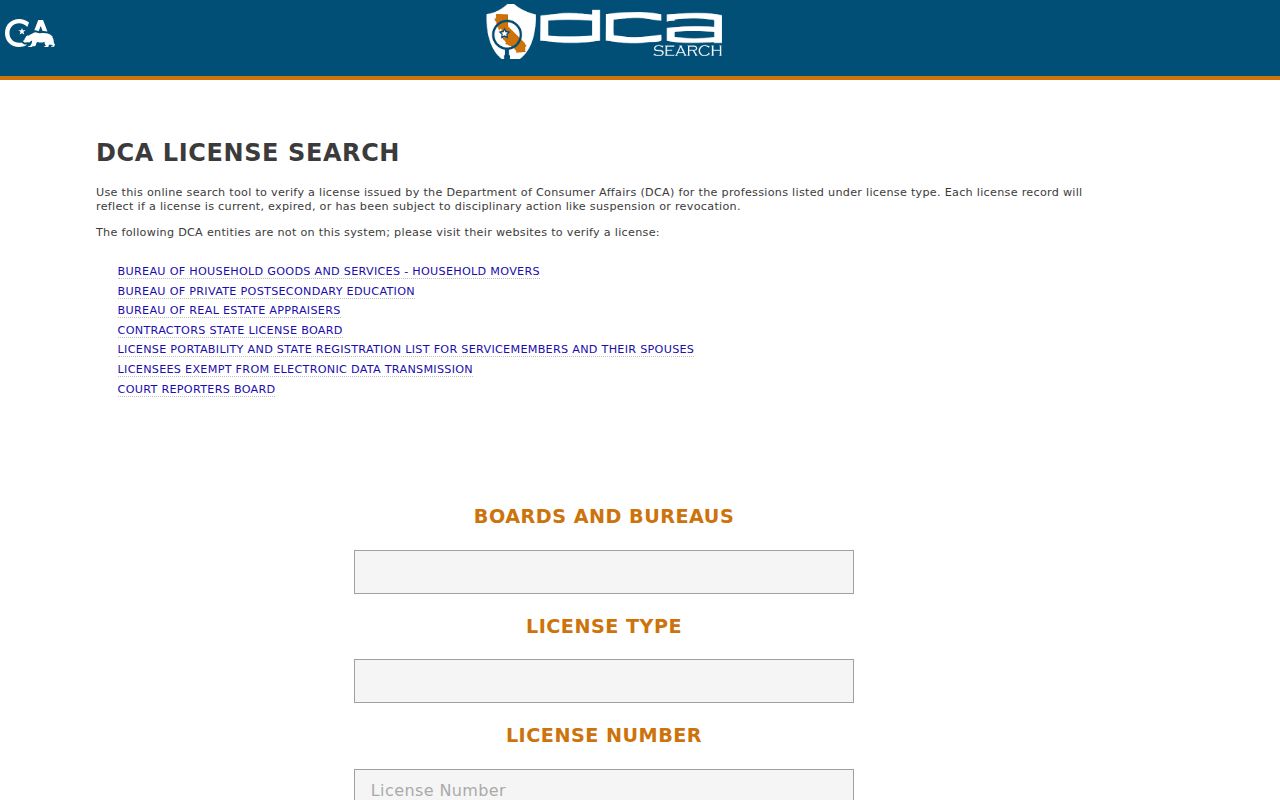
Record the board, license number, status, and date checked, then keep work contact information separate from a home address.
Historical Temple City Directories
Located Temple City directory editions include 1931–32, 1935, 1937, 1939, 1941, 1948, 1951, 1953, 1955, and 1959. The list is intermittent, not a proof of a continuous run. Some leads point to the Allen County Public Library Genealogy Center, some to subscription collections, and the FamilySearch catalog lists a “Polk’s Temple City” title without exposing every volume or confirming every publisher. The Los Angeles Public Library offers free digitized city and street directories from 1875 through 1987, searchable by name or address. The historical shelf belongs to the dedicated Temple City city directory collections treatment.
The 1935 Los Angeles Extended Area white pages are especially useful for reading practice. An entry may show surname, given name or initials, an “r” residence mark, house number, abbreviated street, exchange, and telephone number. It does not reliably show spouse, occupation, ownership, or every household member. The edition was revised to July 8, 1935, so a cover date should not be treated as the exact listing date.
Pair directory editions with the 1930, 1940, and 1950 federal census. When OCR misses a known household, use the enumeration-district map and browse. Missing from a directory may mean a move, a publication gap, an unlisted telephone, a death, or an OCR problem.
Temple City Safe at Home
California Safe at Home gives qualifying participants a substitute mailing address and a confidential voter option. The program covers specified victims and threatened public-entity workers, contractors, and household members. Enrollment goes through a designated agency, not a general public search. A substitute mailing address can hide a participant from ordinary public routes, but it does not erase a property’s legal description when the person buys in their own name.
Lawful use. Temple City records are for personal, lawful research, family history, civic understanding, and similar legitimate needs. Do not use a name, address, court result, voter detail, or parcel record to stalk, harass, intimidate, or harm another person.
The Safe at Home application information explains the enrollment path. A protected address is not a research gap to defeat; it is a legal confidentiality choice.
Temple City Records Scams
Public facts can make a convincing false message. A court notice that demands payment by text, an obituary-based debt call, a government imposter, a deed-copy solicitation, or an unclaimed-property fee request should be checked through the named custodian. Courts do not demand payment through an unexpected text, call, or email. The California Controller’s unclaimed-property search and claim route is free.
- Open the official court, Recorder, or Controller address yourself instead of following a payment link.
- Call the office using its published number and ask whether the case, document, or claim exists.
- Do not send gift cards, crypto, wire transfers, or a fee to release a supposed record.
- Report identity theft or an online crime through the state or federal reporting route.
Correct names, APNs, captions, and dates do not authenticate a solicitation. They only show that a caller may have copied a public source. When a record matters, verify it with the custodian and keep the official document number.